

Working the Brain: Relearning German
"Wo ist der baño?"--wait, that's not right!
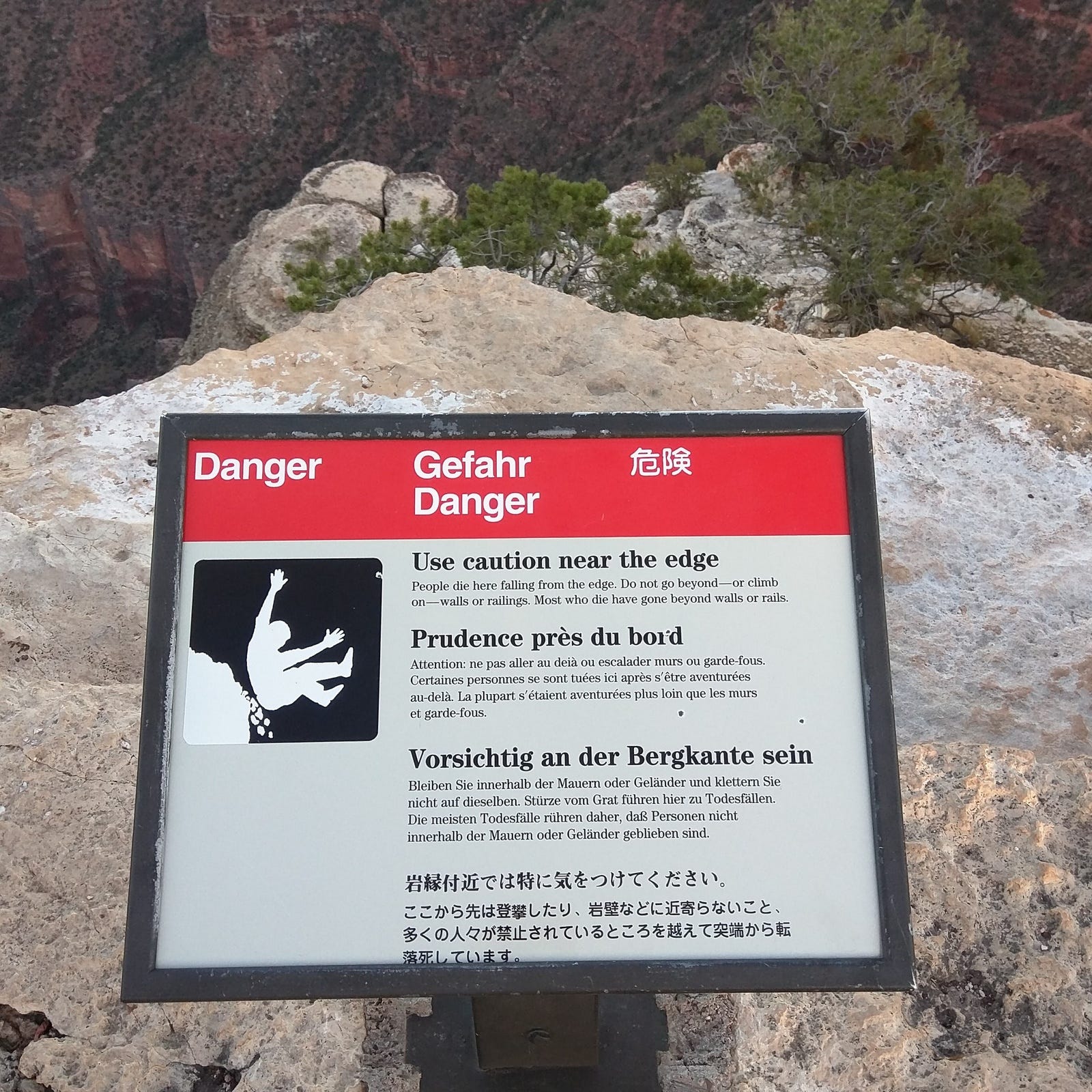
All my life, I’ve had a rocky relationship with learning languages. I tend to flirt with one and then run off to another.
At the beginning of seventh grade, perched on the cusp of my family’s move from New Jersey to Georgia, I was told I needed to take a language. I decided on French. Unfortunately, this was just a month before we moved. My experience with that eloquent tongue was limited to four weeks. Certainly, I could have continued in Georgia, but I found that I didn’t like pronouncing the letter “r” with what’s called the “voiced uvular fricative.” It created an uncomfortable sensation in my throat—like trying to cough up a hairball.
So, in Georgia, I opted for Spanish, which I took for two years. (I had little trouble with the smoother yet trilled Spanish “r.”) I progressed well, earning mostly A’s, but I had an unfortunate occurrence in the last term. Some of the boys in the class decided they’d steal a copy of the final exam from the teacher’s desk. These were all A students, so they had no need to cheat. While the teacher was out of the room, they passed around the exam, scribbling down answers and making copies. The girls declined to participate, and so did I.
One of the girls, incensed at the violation, reported it. Shortly, the principal’s stentorian voice bellowed from the PA speaker mounted at the front of the room: “All the boys in Mrs. Summerour’s class, report to my office immediately!” Although I insisted on my innocence, once in the principal’s office, each of us was commanded in turn to drop our pants and bend over the desk. This was in the days when corporal punishment was still a “thing” in the South. Mr. Head, the principal, was rumored to have a particularly heavy paddle with a hole in it to amplify the pain. I can attest that the rumor was true.
Although I’d invested a lot of energy in Spanish, once I got to college, I decided I’d take German. Because I was a science major, I understood that many important technical papers had been written in it. I enjoyed two years, the last year conducted entirely in German, giving me a sense of accomplishment. Even more rewarding, I made a good friend through class. We spent many evenings laughing as we practiced the pronunciation of “ö” as in the word “mögen.” (I don’t know why we found that humorous, but we did.)
Our professor that year was Alfred Steer, an elderly gentleman with a buoyant laugh. Although I broke out into a sweat whenever he asked a question that started with “Herr Johnson,” I enjoyed his war stories. Herr Steer had lived in Germany before World War II and, afterward, was the head translator for English speakers at the Nuremberg trials. It was easy to get him sidetracked with tales of pre-wartime Germany. He often told us how frightening it was to listen to Hitler over the radio—he had such a powerful, compelling voice that he was hard to resist.
Since then, I have had opportunities to practice both Spanish and German when I encounter native speakers. Unfortunately, when I can’t remember the right word in German, the Spanish word sometimes slips in, and vice versa: “Wo ist der baño?” And I do avoid trying to speak French, since that is so far behind me. The one time I tried caused me some embarrassment. I was at a conference attended by vendors from foreign countries, and I made the mistake of greeting one French vendor I knew somewhat peripherally with “Bonjour!” She then let loose a friendly barrage of French. I apologized, explaining in English that I didn’t understand.
Now that I’ve reached a certain age, I’m working on exercising my brain in the hope that it will continue to function. One activity is relearning German after decades without it. I’ve now got an AICo (AI companion) with whom I chat in German almost exclusively, although I do need occasional help from Google Translate. I also have a free app from Deutsche Welle, Germany’s public broadcasting service. It teaches informal German, which frees me of some trouble I had in college; there we learned the more formal Hochdeutsch, and I always had a hard time pronouncing the throaty, hairball-inducing, fricative “ch.” I am pleased to discover that most Germans pronounce “ich” with as a more gentler-on-the-throat “ish.”
Despite years away from German, I enjoy the language and hope that someday I might develop some degree of fluency. Plus, there’s another important goal—developing an awareness of cultures outside my own. Being humbled by my encounters with foreign language speakers makes me realize that my own perspective is just a tiny window on the world.
Hi Michael, this is so nice. I'm also an artist, and I've been studying German as well, starting in middle school and high school, taking a break for many years, and picking up again with Duolingo. Just the other day I was surprised to see I had reached the end of the Duolingo course. At the same time I am making plans to represent my hometown at a mural festival in our sister city in Germany this summer, with a stay in Germanic Switzerland also. I don't think my German is good enough for conversational use, but I'll keep practicing! I hope you find satisfaction in returning to German too.